From Snake and Symbian to Lumia, Microsoft and HMD
An illustrated UnlockMe history · Published 7 November 2026 · Updated 8 November 2026
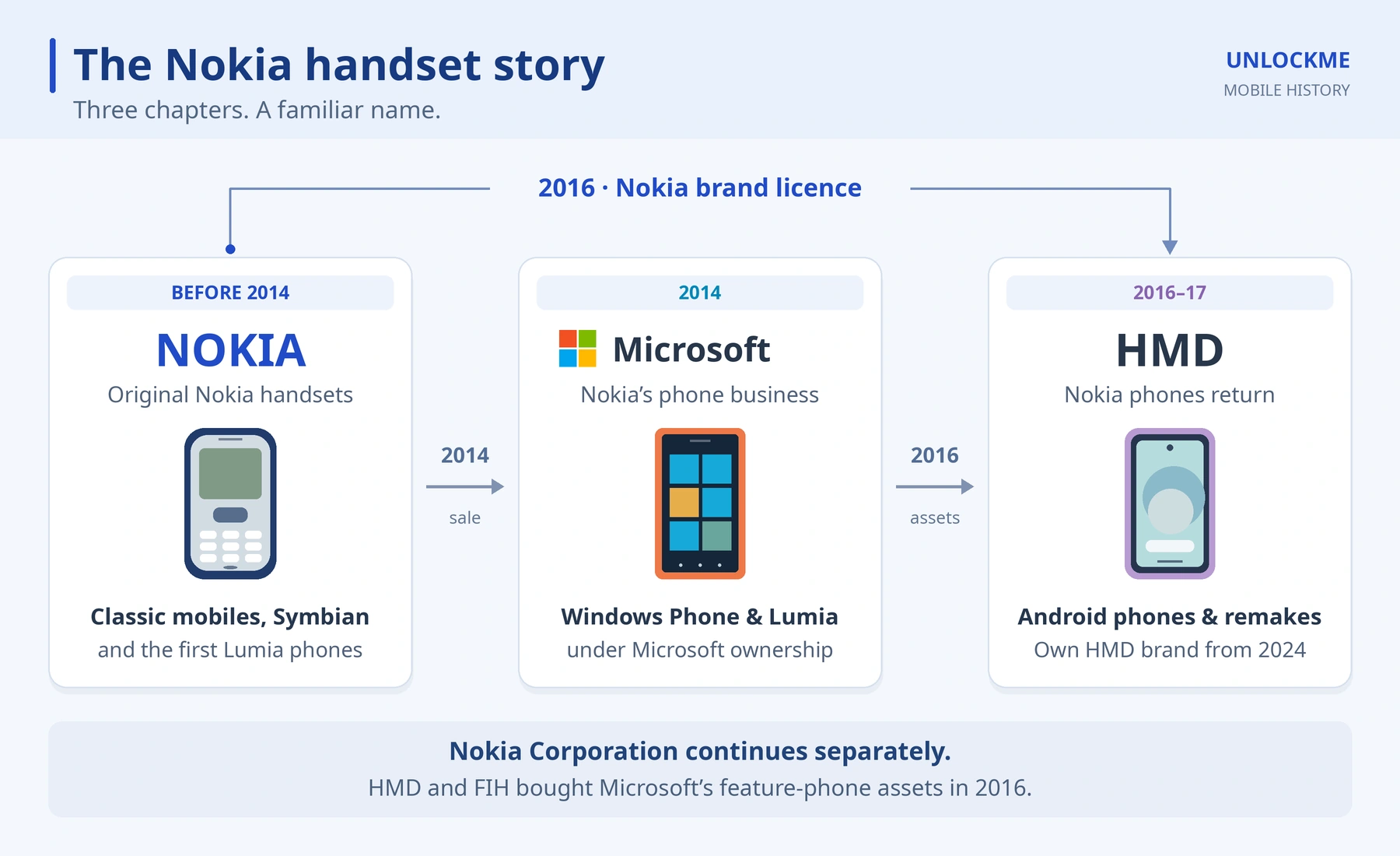
There was a time when choosing a mobile meant deciding which Nokia to buy. Perhaps you wanted the sensible one, the tiny one, or the one with the sliding cover. Whatever you picked, there was a good chance it would make that familiar Nokia sound when somebody rang.
Then the smartphone market changed, Nokia lost its lead, and the name on the front of the phone became only part of the story. Symbian gave way to Windows Phone. Lumia passed to Microsoft. Later, HMD brought Nokia-branded handsets back with Android and a helping of nostalgia.
It is a remarkable journey, but two details matter from the start: Nokia was an early smartphone pioneer, and Nokia the company still exists. What fell was its dominance of the handset market. [4][5][24][34]
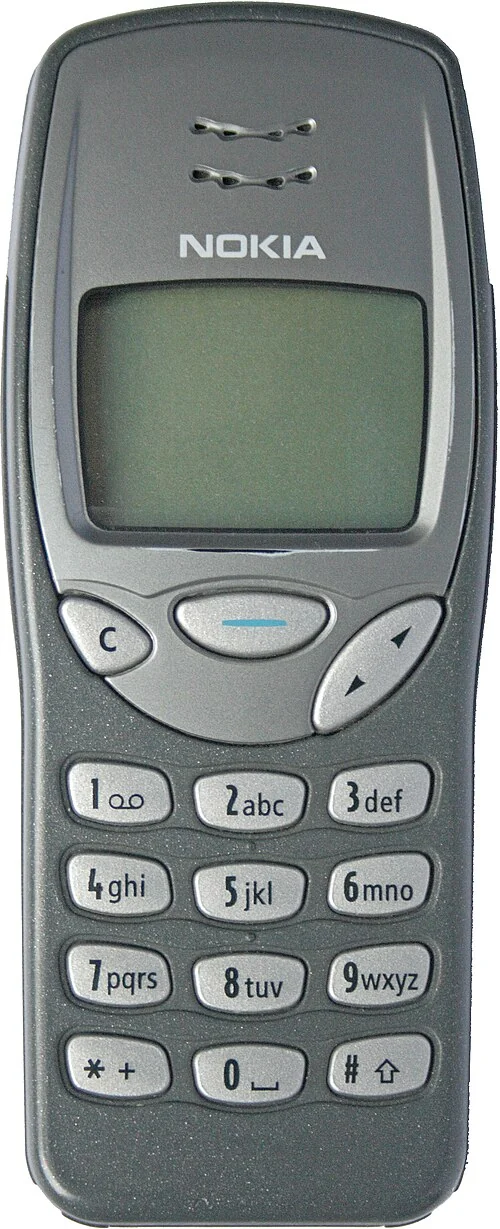
The Nokia many of us grew up with: a familiar name on a phone built by Nokia.
Image: Michael Brandtner · Public domain. Resized and converted to WebP.

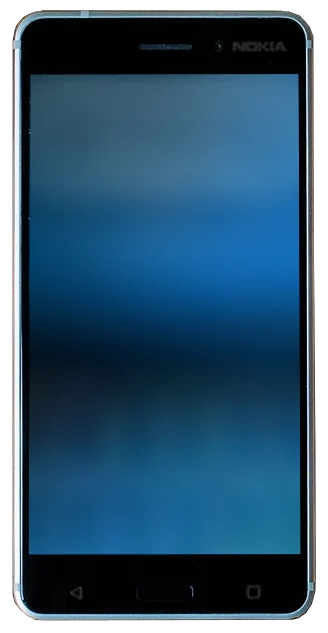
The name returns in the Android era, this time on an HMD phone under licence.
Image: Tinh tế Photo · CC0. Resized and converted to WebP.

Follow the story
The rise · Vertu · The Communicator · Symbian · Lumia & Microsoft · The Microsoft deal · The HMD years · Timeline
How Nokia became the name in everyone’s pocket
Nokia’s beginnings were a long way from mobile phones. Its roots go back to a Finnish pulp mill founded in 1865. Over the following decades, the business expanded into a rather unlikely mixture of industries, including rubber, cables and electronics, before concentrating on telecommunications in the 1990s. [1]
That focus paid off. By 1998, Nokia had become the world’s leading mobile-phone maker. For customers, the attraction was easy to understand: approachable menus, recognisable designs and phones that felt like something you could get on with using. [1]
The 3210 and 3310 became part of everyday life. Changing a cover gave a phone a new personality. A ringtone was a little statement of taste. Sending a text meant learning the keypad well enough to type surprisingly quickly, and Snake could turn a spare five minutes into rather more than five.
This was also the world in which UnlockMe grew up. Network locks, security codes, flashing cables and Nokia model numbers were familiar territory. There was a whole hobby around understanding these handsets and getting more from them.
At its peak: 40% of the market
Nokia’s own estimate of its share of the worldwide mobile-device market in the fourth quarter of 2007. This covers the overall device market, not just smartphones. Even after the iPhone was announced, Nokia was still enormous. [2]
Vertu: Nokia’s taste for luxury
Nokia also had a rather different side: Vertu. Set up in 1998, it aimed to make the mobile phone a luxury item, with hand assembly in England and an emphasis on craftsmanship and personal services. Think of it as the luxury-watch corner of the phone world. [37][38]
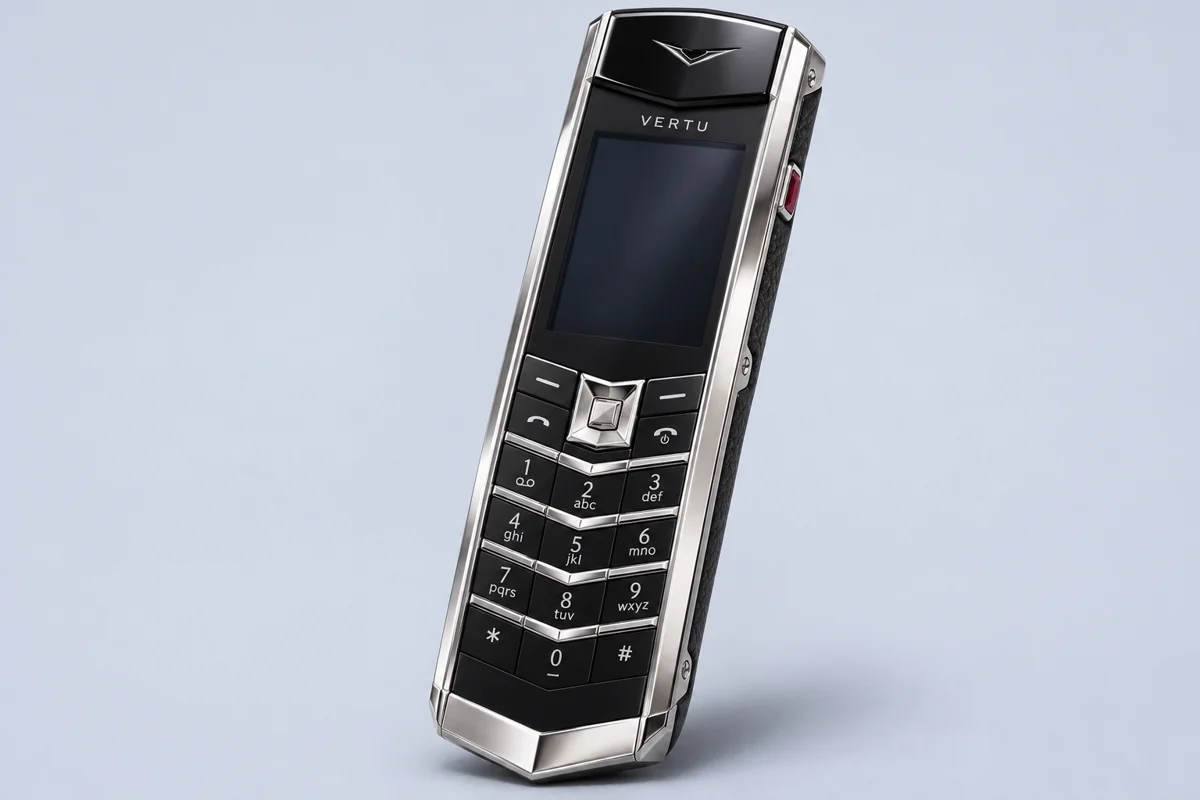
Original price: around £7,500 (stainless steel, 2008). [42]
AI-created illustration.
Nokia sold Vertu to investment firm EQT in 2012, initially keeping a small stake. That put Vertu on its own path before Microsoft bought Nokia’s phone business. Under EQT, Vertu moved from Symbian to Android. It changed hands again in 2015, when EQT sold it to a group of investors. [37][39]
Another sale followed in 2017, this time to a business backed by Hakan Uzan. Later that year, Vertu’s UK manufacturing operation closed. Its owner kept the brand and rights to its technology and designs, however, so the factory’s closure was not the end of the Vertu name. [40]
The Communicator: Nokia had a pocket computer in 1996
If one Nokia family deserves a proper place in this story, it is the Communicator. Closed, it looked like a rather substantial mobile phone. Open it up and there was a wide screen and a full keyboard: a little glimpse of a future in which your phone could do much more than make calls.
The original Nokia 9000 Communicator began shipping in Europe in August 1996, around eleven years before the first iPhone. It brought together email, fax, text messaging and internet access, running Geoworks’ GEOS software. There is a nice bit of British mobile-retail history here too: its European launch took place at The Link in London. In an era when many people were only beginning to get online at home, this was an ambitious thing to put in a pocket. [35]
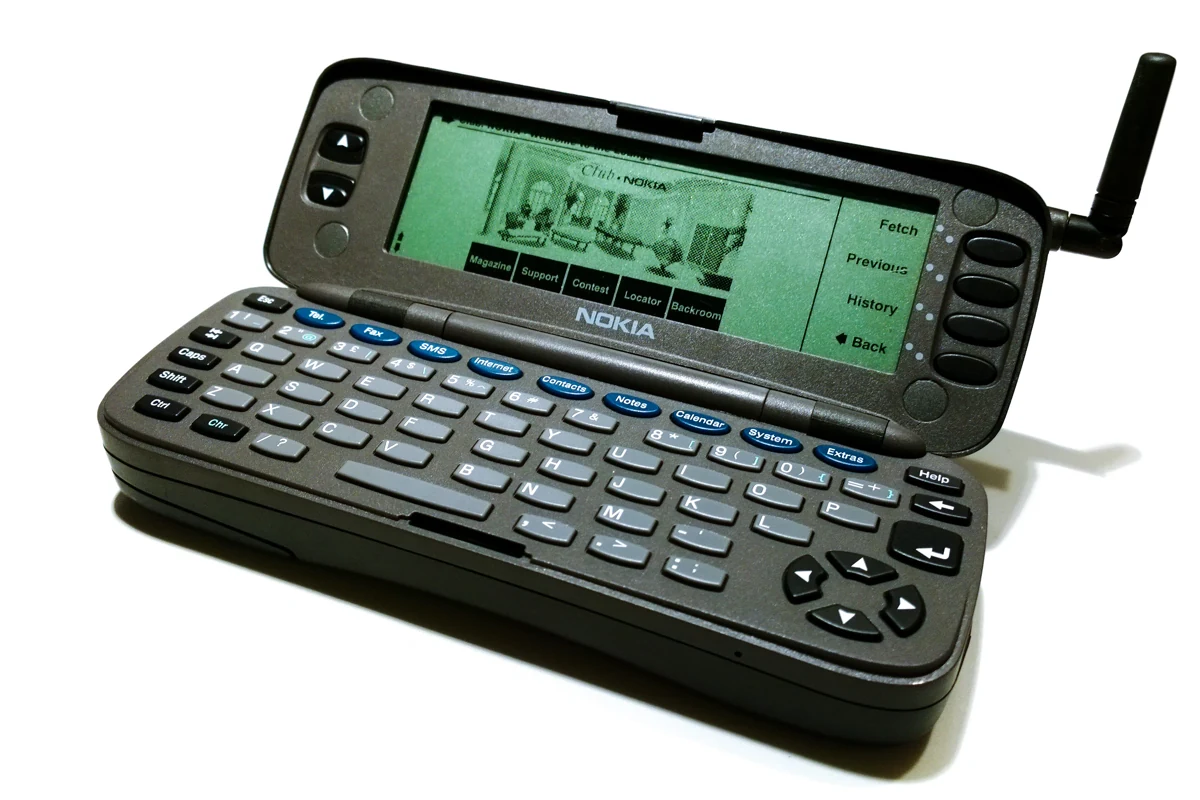
A phone on the outside, a pocket office on the inside.
Image: textlad, via Wikimedia Commons · CC BY 2.0. Resized and converted to WebP.

Nokia kept developing the idea. The 9210 Communicator, shipping in 2001, added a colour screen and moved to Symbian, with office applications and support for extra software. By 2007, the E90 Communicator brought the family into the S60 era, with 3G, Wi-Fi and built-in GPS. Nokia was still investing in a serious mobile computer for people who wanted to work away from their desks. [4][36]
A head start, but a different vision of the smartphone
That is what makes the Communicator such a fascinating part of Nokia’s history. The company had spotted the direction of travel very early: phones and computers were coming together. It had years of experience, working products and a clear reason for people to carry one. This was a real head start.
Looking back, the contrast is in the experience each company put at the centre. The Communicator’s keyboard-and-screen design made sense as a pocket office. Apple’s 2007 iPhone put finger-operated touch, music, photos and web browsing at the heart of the experience. Then the App Store, launched in 2008, made finding and downloading software part of the everyday appeal. Nokia already offered capable smartphones; Apple changed the expectations around using one. [9][10]
So yes, the Communicator feels like a great missed opportunity: Nokia had an early chance to shape the smartphone’s next chapter. But hindsight makes the handover look simpler than it was. A brilliant business phone did not automatically become the phone everyone wanted, and Apple’s success was about much more than removing a keyboard. Alongside Android’s rise, the iPhone helped establish the approach that Nokia struggled to catch. The Communicator shows just how far ahead Nokia’s thinking had once been.
Symbian helped Nokia get ahead
It is tempting to tell this story as though Nokia made basic phones until Apple arrived and forced it to discover smartphones. The dates tell a different story.
Symbian was established in 1998 by Psion, Nokia and Ericsson, with Motorola planning to join. Built on Psion’s EPOC software, it was intended to bring computing and communications together in portable devices. Nokia was helping to shape that market from the beginning. [3]
The 9210 Communicator was one early example of that ambition. But Nokia was also bringing Symbian to phones with a more familiar, everyday shape.
The 7650, announced in November 2001 for delivery in 2002, brought the idea into a smaller sliding handset. It combined a colour screen, camera, picture messaging and downloadable software. It was also the first Nokia handset with the Series 60 interface, later known as S60, running on Symbian. [5][6]
Put simply, Symbian was the operating system; S60 was the interface and software platform Nokia built on top. A smartphone could gain new abilities after you bought it. That was quite a leap from choosing a phone largely by the features printed on its box.
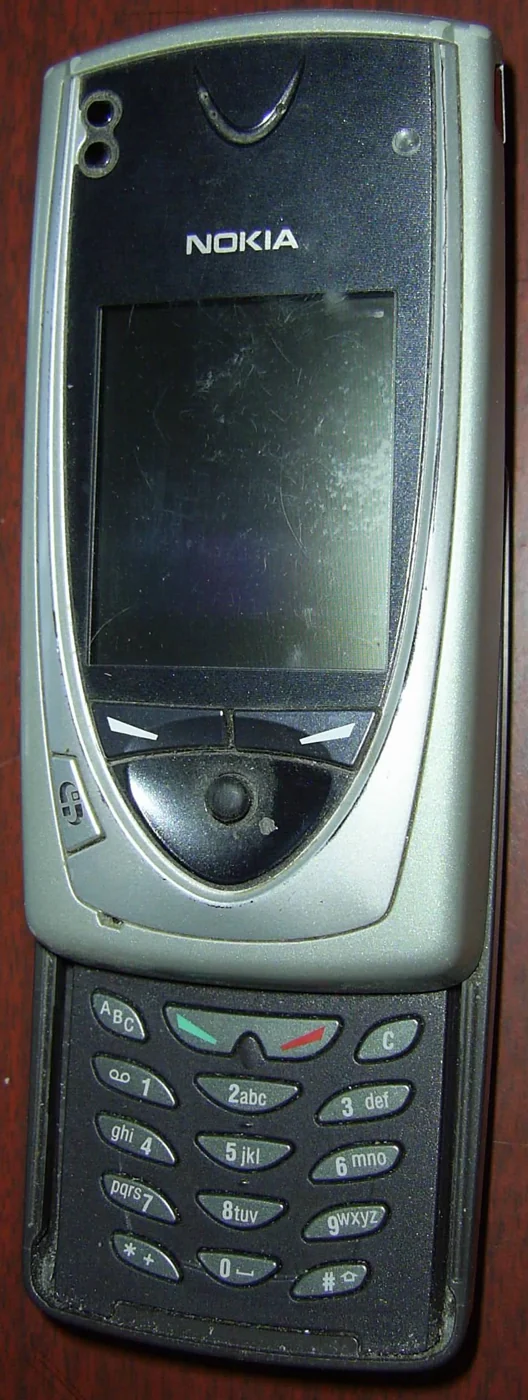
A camera, colour screen and installable applications in a sliding handset.
Image: Miguel Durán / El Museo de los 8 Bits · CC BY-SA 2.5 · El Museo de los 8 Bits. Resized and converted to WebP.

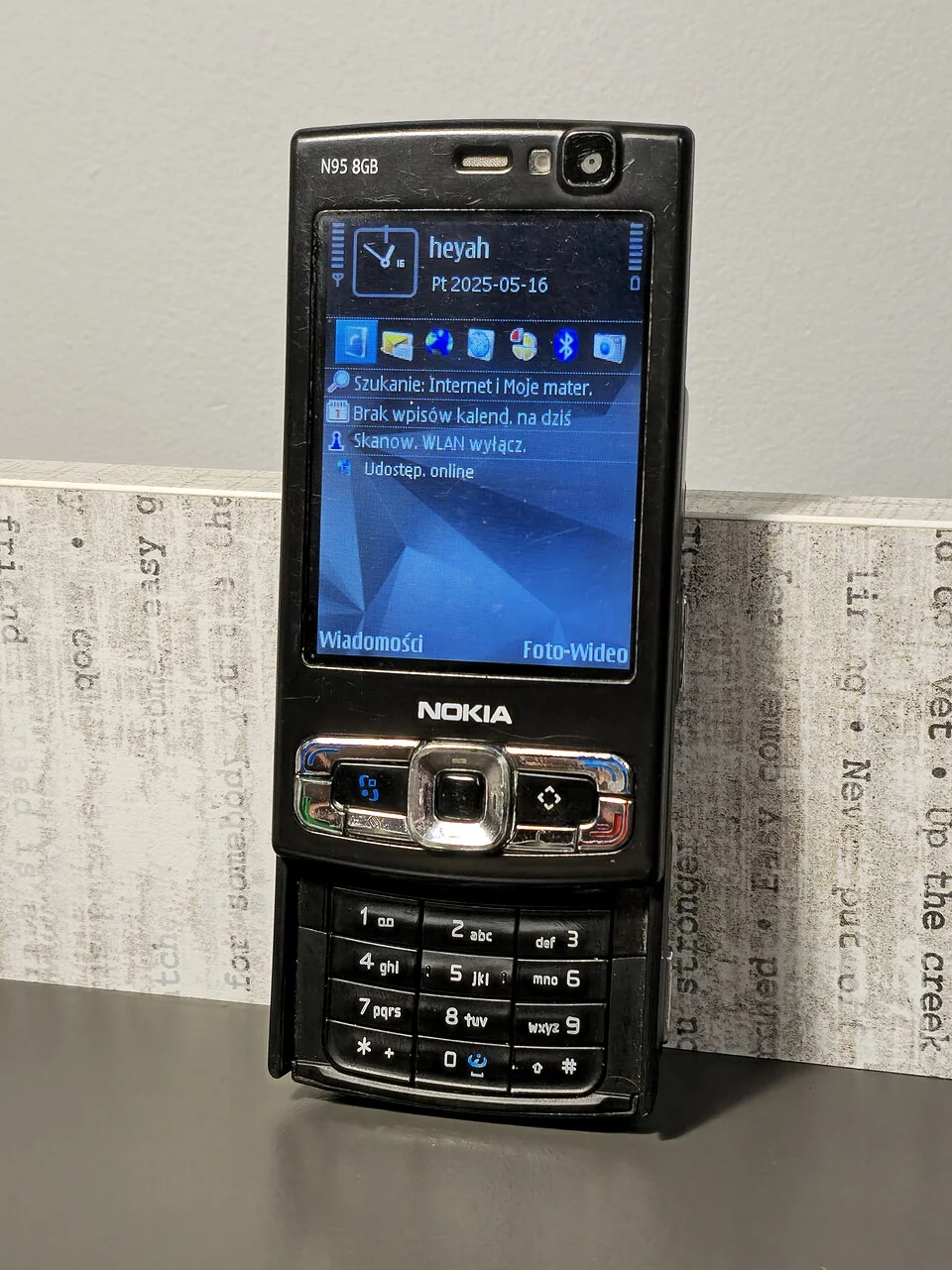
The later 8GB version of the N95 shows how far Nokia’s Symbian phones developed.
Image: Beamish4 · CC BY-SA 4.0. Resized and converted to WebP.

The N95: Nokia’s ambition in one phone
Announced in September 2006 and shipping in March 2007, the original N95 squeezed a five-megapixel camera, GPS, Wi-Fi, fast mobile data and a web browser into a handset with a clever two-way slider. Move it one way for the keypad; the other way revealed media controls. [7][8]
Nokia was already making the case for one device replacing your camera, music player and navigation unit. The N95 makes it difficult to argue that the company simply failed to imagine what phones might become. The harder question was how people would want to use them.
The iPhone changed the experience; Android widened the competition
Apple unveiled the iPhone in January 2007. Its large multi-touch screen and finger-driven interface put the experience of using the phone at the centre of the pitch. A handset could feel strikingly different even when a rival had more features on its specification sheet. [9]
The App Store followed in 2008, making buying, downloading and updating applications part of the everyday phone experience. That same year, the first Android phone, the T-Mobile G1, introduced another major platform into the market. [10][11]
Looking back, this was the crucial change in the contest. Manufacturers were competing over the whole package: the interface, browser, applications, services and the developers willing to support them. A great camera or beautifully made casing could help, but it could no longer settle the argument on its own.
Nokia responded, but catching up was complicated
Nokia did make touchscreen phones. The 5800 XpressMusic arrived in 2008 with touch input, music features and a keenly pitched price. Nokia also completed its purchase of Symbian that year as part of plans for the Symbian Foundation. There was a serious effort to give the platform a future. [12][13]
The N8 followed in 2010 with Symbian^3, a 12-megapixel camera, a xenon flash and HD video. The engineering talent was still plainly there. However, improving individual handsets and rebuilding the software beneath a whole range of phones were very different jobs. [14]
A later study by Timo Vuori and Quy Huy helps explain why the transition was so difficult. Their research into Nokia’s 2005–2010 smartphone development found that internal fear and over-optimistic reporting obstructed honest communication. Pressure to deliver the next product also came at the expense of longer-term software development. [15]
That is a more useful explanation than saying everyone at Nokia was complacent. It suggests a company with capable people and considerable resources that struggled to act on an accurate picture of its problems.
Windows Phone, Lumia and the N9 that might have been
On 11 February 2011, Nokia and Microsoft announced a strategic partnership. Under chief executive Stephen Elop, Nokia would make Windows Phone its principal smartphone platform. The plan combined Nokia’s hardware, mapping and operator relationships with Microsoft’s software and services. [16]
The attraction was understandable: build a strong alternative to Apple and Android, with a distinctive identity. The difficulty was the transition. Nokia had to bring customers and developers towards a new platform while continuing to sell phones based on the old one.
There was another possibility on the table. Nokia’s N9 appeared later in 2011 using the Linux-based MeeGo Harmattan platform. Its curved glass, polycarbonate body and swipe-led interface offered a glimpse of a different Nokia future. But it arrived after the company had already chosen Windows Phone as its main direction. [17][18]
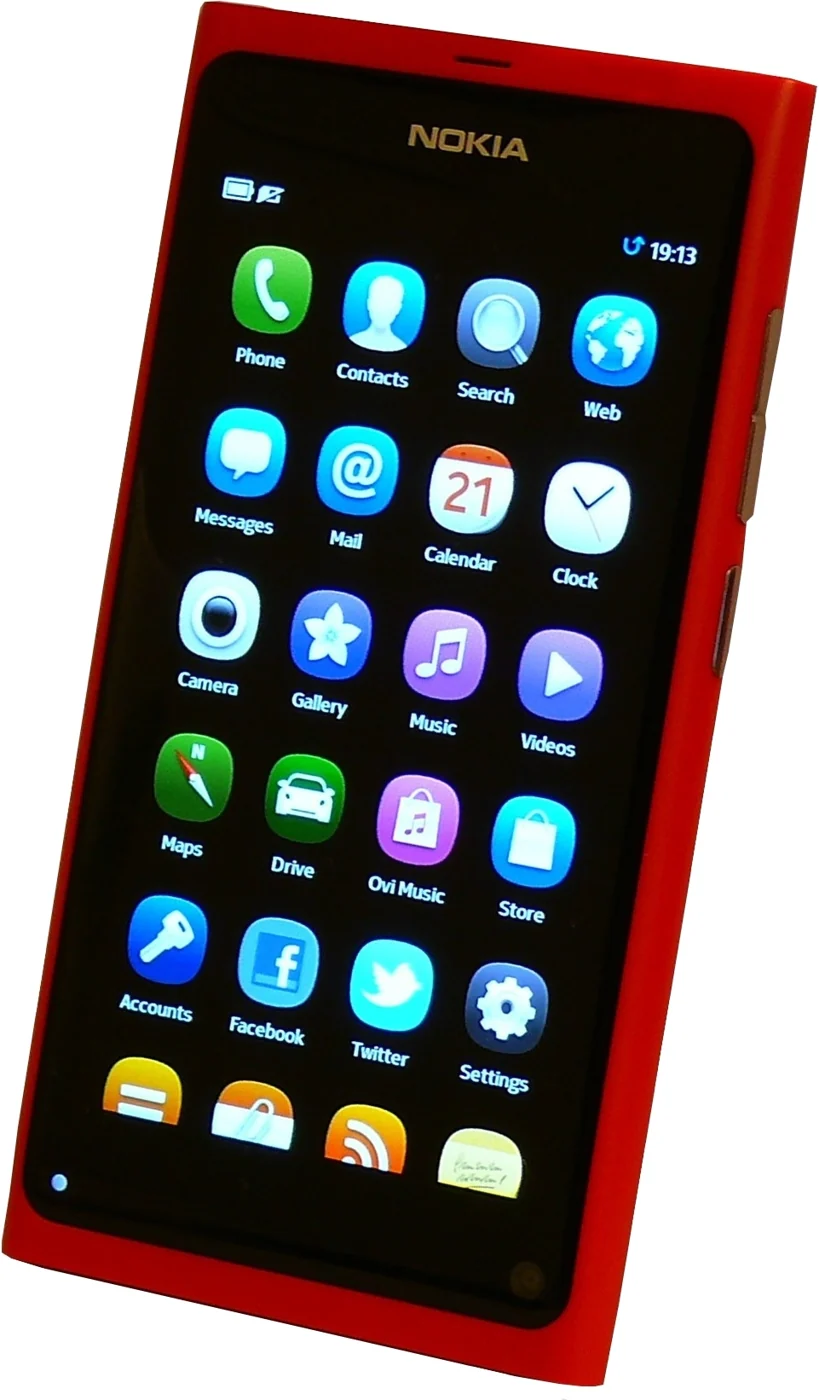
MeeGo Harmattan and swipe gestures: Nokia explored another route in 2011.
Image: Animist · CC BY-SA 3.0. Resized and converted to WebP.

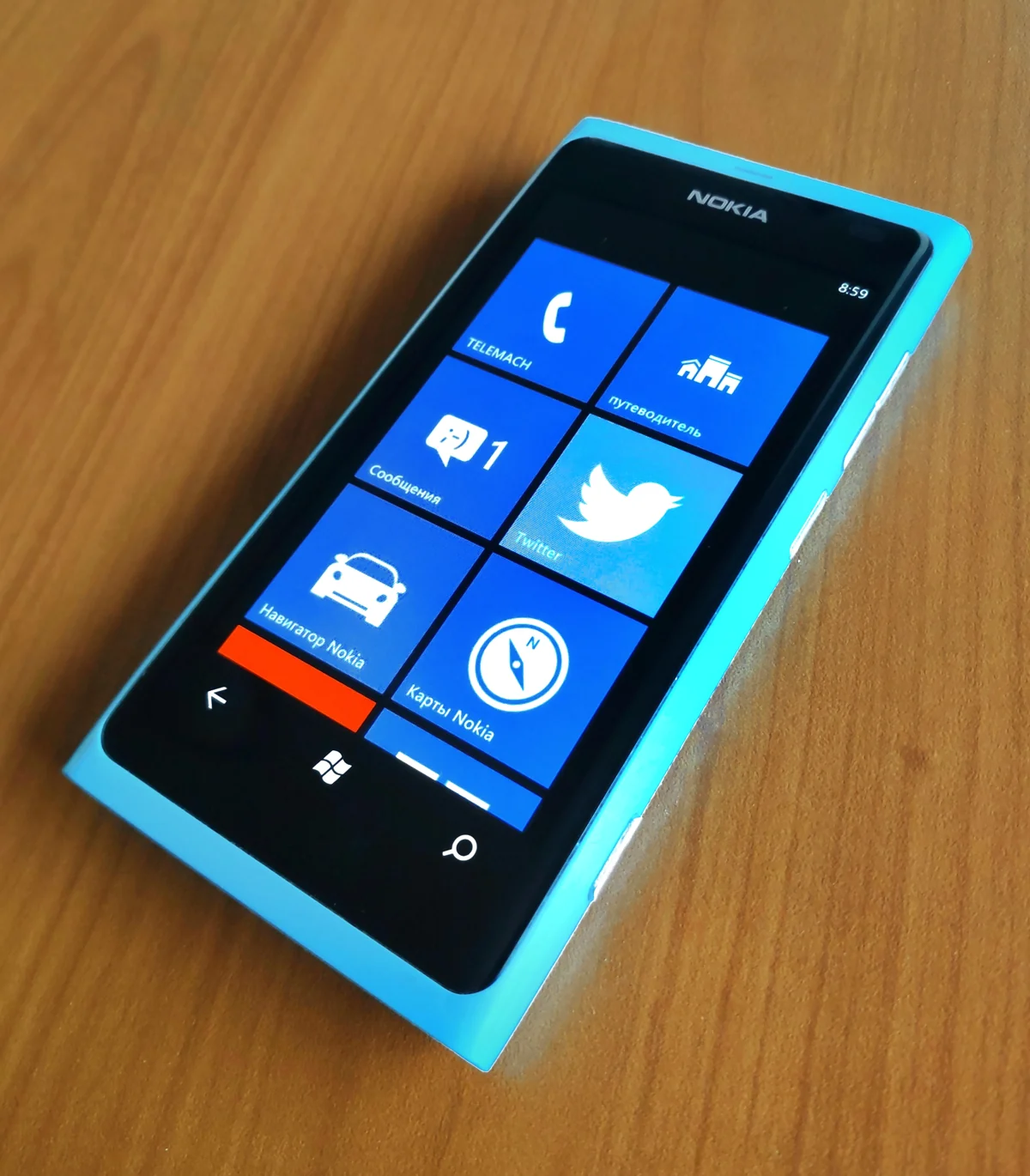
Windows Phone and Live Tiles: the route Nokia chose for its main smartphone range.
Image: Petar Milošević · CC BY 4.0. Resized and converted to WebP.

The Lumia 800 and Lumia 710 were unveiled in October 2011. The 800 borrowed design cues from the N9, pairing a colourful body with Windows Phone’s distinctive Live Tiles. These were phones with character, and their appearance still stands out among the black rectangles of the period. [19][20]
Later Lumias kept pushing Nokia’s camera strengths. The Lumia 1020, announced in 2013 with a 41-megapixel sensor, is a particularly memorable example. Nokia had not lost its ability to build something interesting. [21]
Why a good Lumia was not enough
Windows Phone faced a difficult circle: people wanted their favourite apps before choosing a phone, while developers needed enough potential customers to justify supporting another platform. Nokia’s own 2011 disclosures identified the risk that Windows Phone might fail to attract sufficient developer and partner support. [16]
There were awkward changes along the way, too. Existing Windows Phone 7.5 handsets could receive the redesigned Start screen through Windows Phone 7.8, but could not upgrade to Windows Phone 8. Microsoft explained that the newer system required a different generation of hardware. For an owner, that could make a relatively recent phone feel left behind. [22]
It remains tempting to ask whether Android, or more time for MeeGo, would have saved Nokia’s handset business. Those are interesting alternatives to debate. They are not outcomes history allows us to prove.
The phone business changes hands
In September 2013, Microsoft announced a €5.44 billion deal for Nokia’s phone business and the right to use its patented technology. The sale completed on 25 April 2014. [23][24]
Microsoft bought the phone business, rather than the whole Nokia company. Nokia continued separately, retaining businesses including networks, mapping and technology licensing. That distinction explains why Nokia could carry on even as its familiar handset operation changed owner. [1][23][24]
What Microsoft actually bought
Microsoft gained the teams who designed, built and sold Nokia phones, along with the Lumia and Asha names and rights to many handset designs. But the deal also gave it something less visible: permission to use Nokia’s inventions. [23][41]
These inventions were protected by patents, which give their owners legal rights over how an invention is used. Nokia kept its main patent collection, while Microsoft paid for a ten-year licence, with an option to extend it. Those rights were useful beyond Nokia phones: Microsoft said they also benefited products it already sold. [23][41]
Maps were part of the picture too. Microsoft arranged a four-year agreement to use Nokia’s HERE maps and location services. Nokia kept ownership of the mapping business. The deal was therefore about phones, designs and access to useful technology, rather than buying the whole of Nokia. [23]
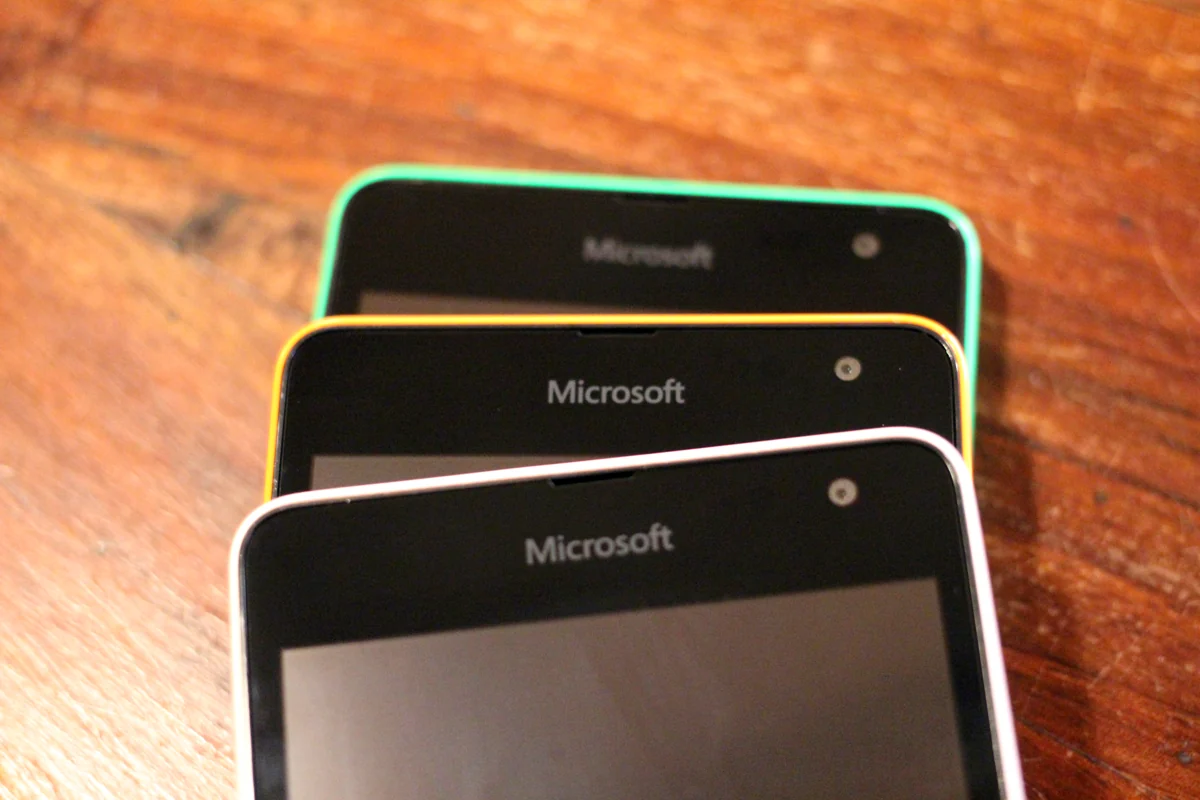
The Microsoft name above the screen made the change of ownership visible to customers.
Image: Maurizio Pesce · CC BY 2.0. Resized and converted to WebP.

By November 2014, the Lumia 535 was being introduced under the Microsoft name. Yet ownership of both the hardware business and the operating system did not produce the hoped-for turnaround. [25]
In July 2015, Microsoft announced approximately $7.6 billion in impairment charges associated with the Nokia acquisition, alongside plans to cut up to 7,800 jobs, primarily in the phone business. The scale of that write-down tells its own story about how far expectations had fallen. [26]
Lumia and Microsoft’s mobile software continued for a while, but the attempt to establish a lasting third major smartphone platform faded. Support for the final Windows 10 Mobile release ended on 10 December 2019. [27]
HMD brings Nokia phones back, this time with Android
Then came a twist that was easy to miss if you were not following the industry closely: Nokia phones returned, but the business behind them was different.
In May 2016, the newly formed HMD Global announced a licensing agreement to create Nokia-branded phones and tablets. Separately, Microsoft agreed to sell its entry-level feature-phone assets to HMD and FIH Mobile, part of the Foxconn group, for $350 million. This was a new arrangement around the brand and phone business, not HMD buying Nokia Corporation. [28][29]
At Mobile World Congress in February 2017, HMD presented a global Android line-up including the Nokia 6, Nokia 5 and Nokia 3. Alongside them came a revived Nokia 3310. It was a neat combination: modern smartphones for everyday use, and a familiar shape to remind people why they liked the name. [30]
Android also meant HMD could use an established application platform. It did not have to persuade developers to build another entire app catalogue around Nokia. The challenge had moved towards competing with the many other manufacturers already selling Android phones.
The remakes gave the brand a particularly enjoyable second life. For anyone who remembered choosing coloured covers or opening a sliding keypad, seeing those model numbers again was part of the appeal. Our guide to using an old Nokia today includes photographs of the originals alongside their later revivals.
HMD starts putting its own name on the front
In 2024, HMD outlined a multi-brand approach: its own HMD devices, Nokia phones and other partnerships. Products such as the HMD Skyline, announced that July, made the company’s own identity more visible. [31][32]
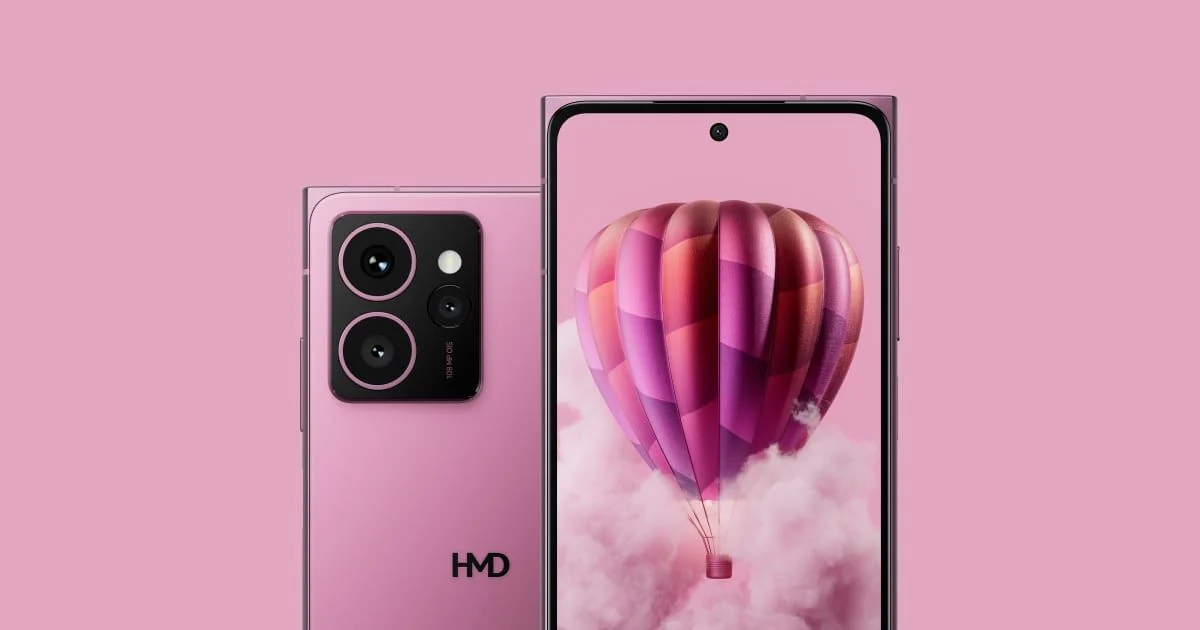
HMD’s own brand moves into the spotlight. The Skyline was introduced in July 2024.
Image: HMD Global · Official product image. Resized and converted to WebP.
By the time of this article’s November 2026 check, HMD’s UK catalogue prominently featured HMD-branded devices, while directing visitors separately to Nokia feature-phone information and Nokia smartphone support. The portfolio continues to evolve, and availability varies by country. [33]
Nokia Corporation, meanwhile, remains a technology company focused on areas including mobile, fixed and transport networks, alongside research and patent licensing. The name has become less visible in our pockets, but it remains active behind the connections our phones use. [34]
Nokia’s handset story, in order
| Year | What changed |
|---|---|
| 1996 | The Nokia 9000 Communicator brings email, fax and internet access to a phone with a full keyboard. [35] |
| 1998 | Nokia becomes the leading mobile-phone maker; Symbian is established. [1][3] |
| 2001–02 | The Symbian-based 9210 and 7650 take Nokia further into smartphones. [4][5] |
| 2007–08 | The N95 shows Nokia’s strengths as iPhone, the App Store and Android change the competition. [7][8][9][10][11] |
| 2011 | Nokia chooses Windows Phone; both the MeeGo N9 and the first Lumias appear. [16][17][18][19] |
| 2013–14 | Microsoft announces, then completes, its purchase of Nokia’s phone business. [23][24] |
| 2015 | Microsoft announces a major phone-business write-down and job cuts. [26] |
| 2016–17 | HMD’s Nokia licensing arrangement leads to an Android range and the revived 3310. [28][30] |
| 2024 onwards | HMD develops its own brand alongside its other device partnerships. [31][32][33] |
Why the story still matters
Looking across these chapters, the clearest lesson is how quickly the basis of competition can change. Nokia was exceptionally successful at building and selling phones. It also helped invent the smartphone market. Keeping that position required a different pace of software development, a compelling experience and lasting support from developers and customers.
No single handset, executive or decision explains the whole decline. The software transition was difficult, the competition improved rapidly, and the Microsoft partnership failed to deliver the scale both companies wanted. HMD’s return gave the name another chapter, rather than recreating the old Nokia empire.
And yet, pick up a 3210, slide open an N95 or see a brightly coloured Lumia, and the appeal is still there. These were phones with personalities. For those of us who spent years using, unlocking and tinkering with them, that is a legacy worth remembering.
Still have one in a drawer?
Read Can you still use a Nokia 3310 today? for a practical look at old handsets, current networks and Nokia’s modern remakes.
Sources and picture credits
The numbered links support the dates, product details and company announcements. Commentary about why events mattered is an editorial synthesis; alternative histories are identified as possibilities. Photographs show the named models and were not necessarily taken in their launch year. Individual image credits and licences appear beneath each picture.
- Nokia: 2014 annual report, history of the company
- Nokia: fourth-quarter and full-year 2007 results
- Wired: the creation of Symbian, 24 June 1998
- Nokia: the 9210 Communicator starts shipping, 19 June 2001
- Nokia: announcement of the 7650, 19 November 2001
- Mobile Phone Museum: Nokia 7650 and Series 60
- Nokia: announcement of the N95, 26 September 2006
- Nokia: N95 shipping announcement, 22 March 2007 (SEC filing)
- Apple: iPhone announcement, 9 January 2007
- Apple: iPhone 3G and the App Store, 10 July 2008
- Google: a decade of Android, recalling the 2008 T-Mobile G1 launch
- Nokia Conversations archive: 5800 XpressMusic, 2 October 2008
- Nokia: acquisition of Symbian Limited, 2008
- Nokia: N8 announcement, 27 April 2010
- Vuori and Huy: Distributed Attention and Shared Emotions in the Innovation Process
- Nokia and Microsoft: strategic partnership, 11 February 2011
- Nokia: N9 announcement, June 2011
- Nokia: 2012 annual report, MeeGo and the platform transition
- Nokia: Lumia 800 and 710 announcement, 26 October 2011 (SEC filing)
- Microsoft Devices Blog: the evolution of Lumia
- Nokia: Lumia 1020 announcement, 11 July 2013
- Microsoft: Windows Phone 8 and the 7.8 upgrade, 20 June 2012
- Microsoft: Nokia transaction announcement, 3 September 2013
- Nokia: sale of Devices & Services completed, 25 April 2014
- Microsoft: Lumia 535 announcement, November 2014
- Microsoft: phone business restructuring, 8 July 2015
- Microsoft: Windows 10 Mobile end of support
- HMD: founding and Nokia brand agreement, 18 May 2016
- Microsoft: feature-phone assets sale to FIH and HMD, 18 May 2016
- HMD: Nokia Android range and revived 3310, 26 February 2017
- HMD: multi-brand strategy, February 2024
- HMD: Skyline announcement, 18 July 2024
- HMD: current UK catalogue, checked 7 November 2026
- Nokia: current company and network businesses, checked 7 November 2026
- Geoworks: European launch of the Nokia 9000 Communicator, 15 August 1996 (archived press release)
- Nokia: E90 Communicator announcement, 12 February 2007
- EQT: sale of Vertu and its history, 14 October 2015
- Vertu: craftsmanship and the EQT purchase, 15 October 2012
- Nokia: sale of Vertu completed, 12 October 2012
- Mobile World Live: Vertu’s change of owner and UK factory closure, 13 July 2017
- Microsoft: executives explain the Nokia deal, 3 September 2013 (transcript)
- IntoMobile: Vertu Signature launch prices, 4 October 2008 (stainless-steel model: £7,540)