How a job for specialists became something you could do from your bedroom, why Dejan became such a big name, and how Nokia kept the unlocking scene on its toes.
By Dan Luik · Founder of UnlockMe.co.uk
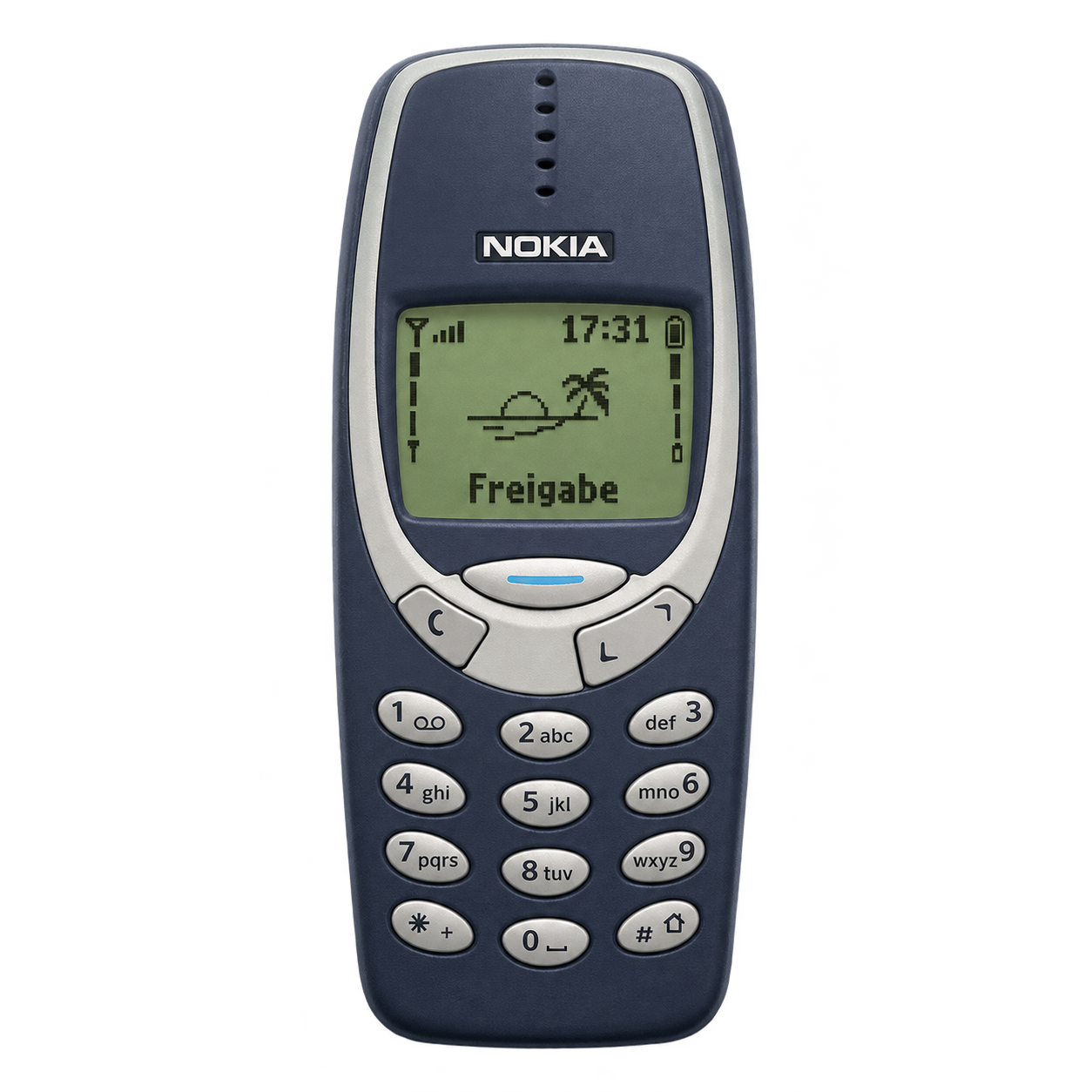
The cable-era classic.
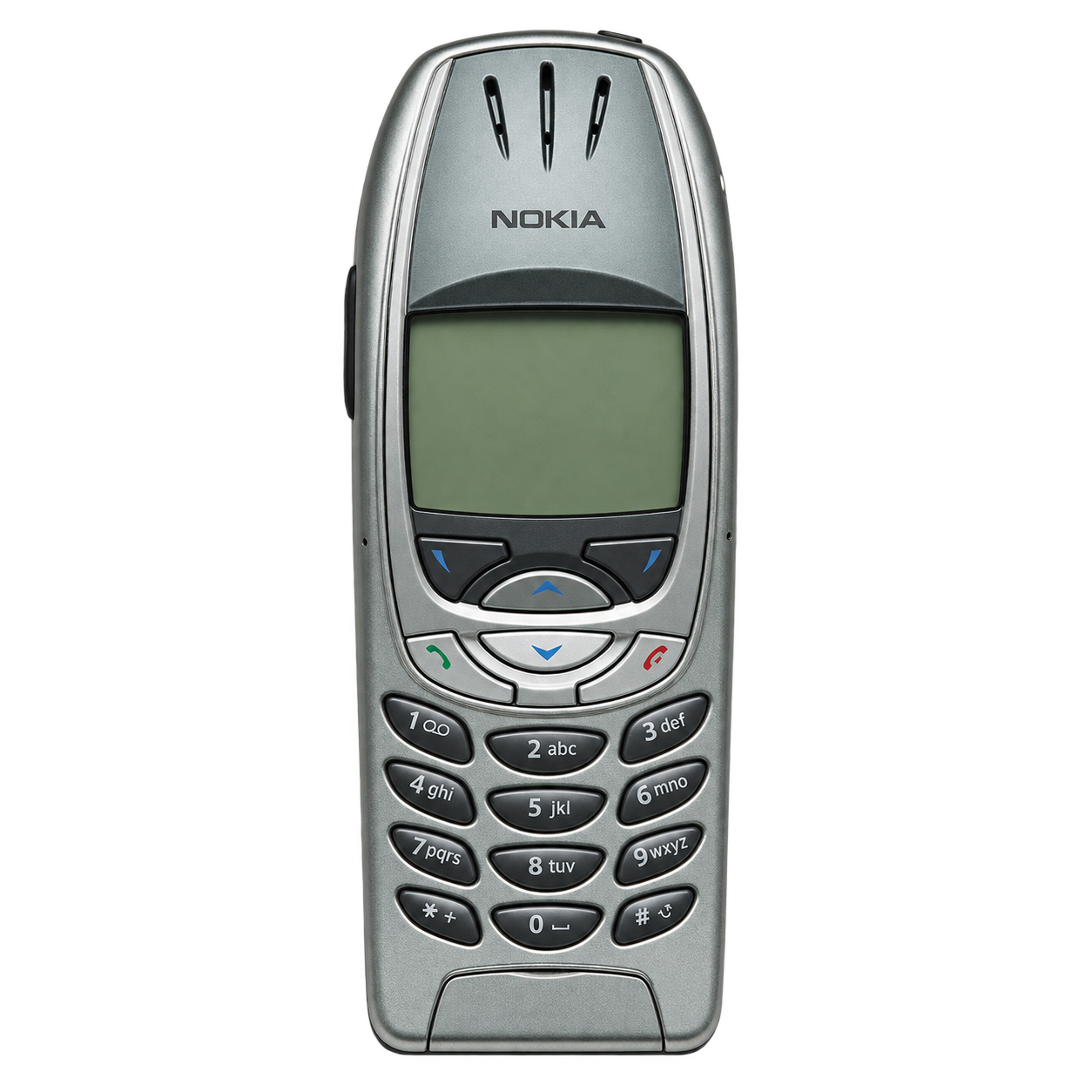
The generation of free keypad codes.
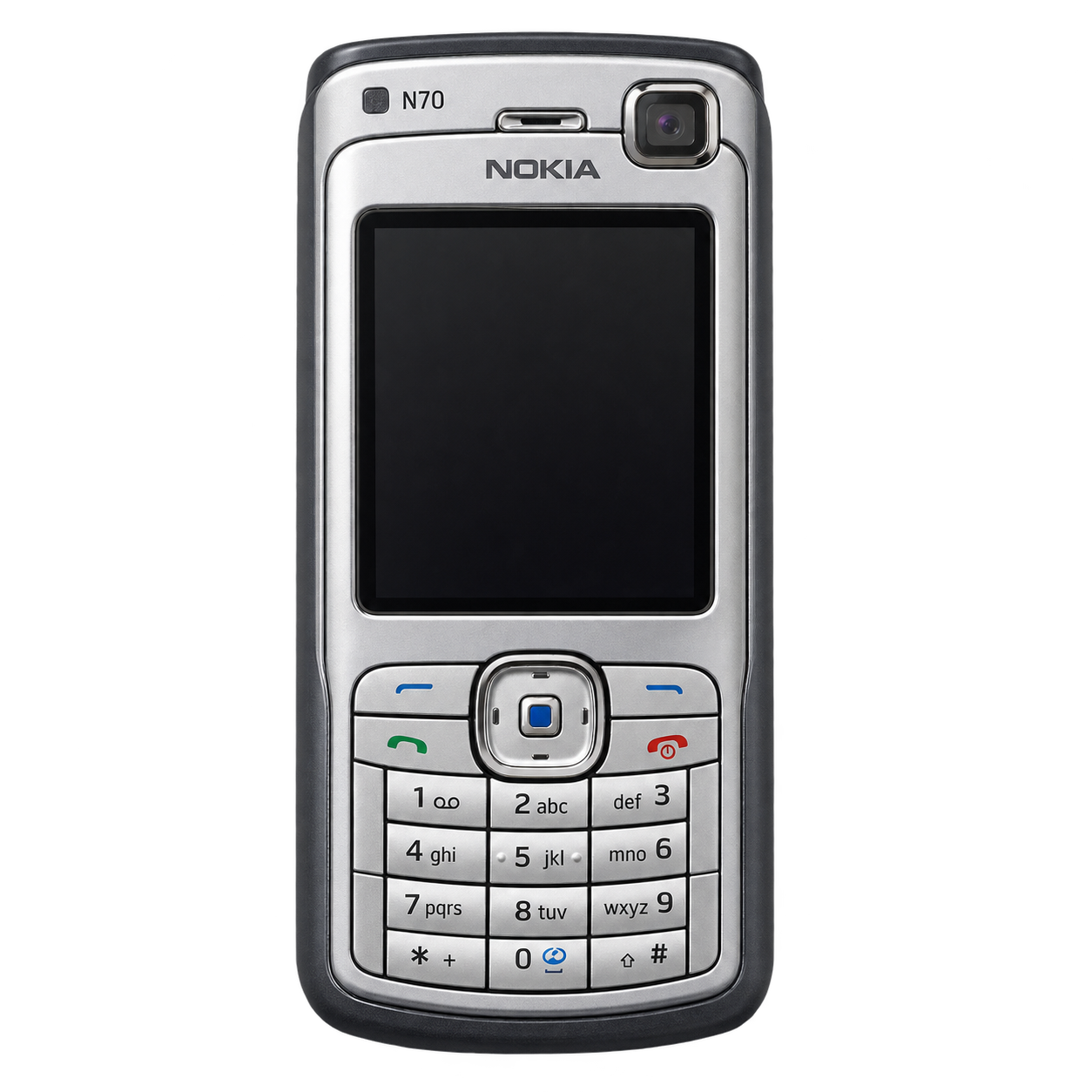
A tougher unlocking challenge.
If you owned a Nokia in the early 2000s, you might remember this. Your phone worked perfectly, you found a better deal on another network, and you put in the new SIM.
Then came the message: “SIM card not accepted.”
You could change the cover, compose a ringtone and spend far too long playing Snake. But using a different network? Your phone had other ideas.
That little restriction helped create a whole unlocking industry. There were market stalls, phone shops, specialist cables, expensive boxes and websites offering codes. Behind them was a busy community of developers and enthusiasts trying to work out how it all worked.
And every so often, something happened that changed the scene overnight. A tool appeared. Someone shared their work. A service people had been paying for suddenly became free.
I built UnlockMe during that period. Looking back through the old tutorials and forum posts, you can still feel the excitement. So here’s how the journey unfolded.
First, what were we actually unlocking?
A network lock restricted which SIM cards a handset would accept. Removing it let you use a compatible SIM from another provider.
It didn’t remove a stolen-phone blacklist, cancel a contract or reset every password on the phone. Those were different problems, although they were often confused in forum questions!
For this story, there are three Nokia families to remember: DCT3, DCT4 and BB5. Think of them as successive generations of the technology inside the phones. Each brought a new chapter in the battle to unlock them.
DCT3: a cable, a PC and a little patience
This was the world of phones such as the Nokia 3210, 3310 and 8210. Before free keypad codes became widely available for these handsets, the usual do-it-yourself route involved connecting the phone to a computer.
That could mean buying the right cable, finding software that supported your handset and persuading it to talk to the correct COM port. If you remember M-Bus and F-Bus cables, you probably remember spending some time checking connections too.
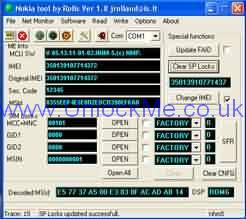
My original DCT3 tutorial recommended Nokia Tool by Rollis 1.8. Once it had detected the phone, you could read its information, see which locks were closed and use the “Clear SP Locks” button. With the right setup, the actual unlocking was remarkably quick.[1]
That was part of the appeal. Something which looked like a specialist job turned out to be manageable at home. The trick was knowing which equipment and software to use.
Enter Dejan
If you spent time around Nokia unlocking forums, Dejan Kaljevic was a name you kept coming across.
A developer associated with Serbia, Dejan became closely linked with Nokia flashing and unlocking tools. Forum discussions from 2001 already refer to his DCT3 flasher. Flashing meant reading or changing the phone’s internal software, opening up possibilities beyond removing a network lock.[2]
To an enthusiast, that made a Nokia much more interesting. It was a device you could investigate and modify, rather than simply use as it came out of the box.
Dejan’s reputation sometimes leads to a simplified version of events: he cracked Nokia and gave everyone free codes. The real story has more people in it. His tools were important, and his later BB5 release was a major milestone, but the free DCT3 and DCT4 calculator story also belongs to several other developers.
DCT4: when the valuable part was a number
With phones such as the 6310i, 7210 and 7650, the story moved into the DCT4 era.
Unlocking methods still depended on the model and software version, but code calculation became particularly attractive. Rather than connecting the phone to a PC, you could obtain a specially calculated code and enter it through the keypad.
For supported phones, that changed everything. A code could be supplied from a distance. No posting your handset away. No special cable on your desk.
There was money in being able to generate those numbers. Commercial calculators were sold with hardware dongles: little devices attached to the computer which were needed for the system to work. My February 2004 article described how the calculation was held inside the dongle while the PC software displayed the result.[3]
The old UnlockMe news archive captures the falling price. In February 2003, I was reporting code generators at around £90. By March, there was an offer at £60.
Then, on 9 July 2003, I posted the news people had been waiting for: a DCT4 calculator was available for free.[4]
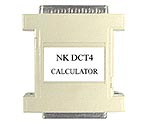
A DCT4 parallel-port code calculator.
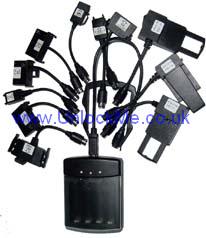
Unlocking hardware and handset adapters.
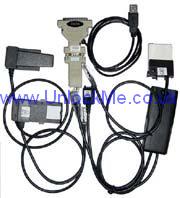
A DCT4 flashing kit from the original tutorials.
Original archive images from UnlockMe. These show the period’s equipment; the flasher kit is not itself the free keypad-code method.
The free calculator that changed the conversation
One important program was dct4nck.exe, credited in my original article to Jozso. It could generate codes from a command line. Powerful, yes. Particularly welcoming to a beginner? Perhaps less so.
Other developers built friendlier interfaces around the calculation software. Instead of typing commands, you could choose a model, enter the phone’s details and click a button. A July 2003 forum release by d_bug credits Azywerks and Jozso, showing some of the people behind that early wave of free tools.[3][5]
As calculators developed, names such as CyberGSM, Hollowman and SmartDCT4Calc appeared regularly in my site updates. New versions made the tools easier to use and kept up with awkward handset and network combinations.
That last bit mattered. There were different code settings, unfamiliar “box serial” options and cases where the network information needed more attention. Free didn’t mean every phone would work with the first settings you tried.
But the biggest change had happened: ordinary phone owners could now generate their own codes without buying a commercial calculator.
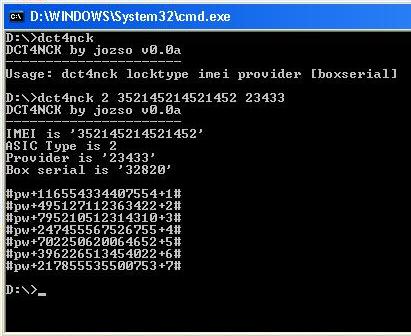
Jozso’s dct4nck in a Windows command prompt.
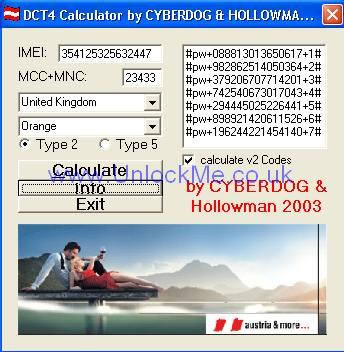
The CyberDog & Hollowman calculator from the 2003 scene.
So how could a calculator know the code?
It sounds almost too easy. How could a program on your PC know the right answer without asking the mobile network?
Think of it as a hidden recipe. For supported DCT3 and DCT4 phones, the calculator took information such as the handset’s IMEI — its individual identity number — and the network it was locked to. It combined those details with the appropriate calculation settings and followed a fixed sequence of mathematical steps.
The result was a code the phone could recognise.
It wasn’t trying millions of codes on the handset, and it didn’t need a live connection to the network’s customer database. Given the same inputs and settings, it produced the same answer.
The difficult part was discovering and reproducing the recipe. Once that work had been done, a normal computer could carry out the calculation very quickly.
From the owner’s point of view, all that work ended with a rather odd-looking string of characters beginning #pw+. Enter the correct code and, with a bit of luck, the phone displayed the words everyone wanted to see:
Phone restriction off.
DCT3 gets its own free-code moment
Here’s a slightly surprising part of the story: the older generation didn’t get its widely shared free calculators first.
For a while, my DCT3 guide explained that free unlocking meant using a cable, whereas DCT4 owners could calculate codes. Then the DCT3 page gained a rather excited update pointing readers to a new cable-free method.
On 29 January 2004, my news page credited forum member MONO and the Trycktill website for free online DCT3 codes. By February, I was also recommending Unique’s software for calculating them offline.[4]
For someone with a supported 3310 sitting in a drawer, this was a lovely development. The cable could stay in the drawer too.
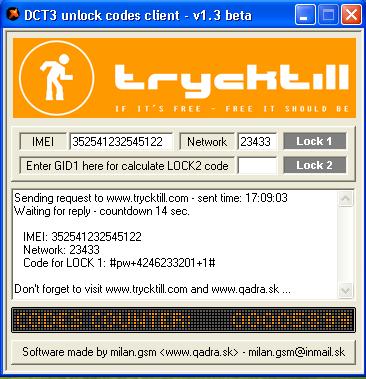
When people could build their own calculators
A free program was one thing. Being able to see and reuse the calculation code took the story further.
On 14 April 2004, a NokiaFREE forum member called indear posted C implementations of the DCT3 and DCT4 algorithms. Other members tested them and started building calculators of their own. Crux shared a calculator, while skynet worked on Java versions which could run on compatible phones.[6]
There’s something rather pleasing about that: a mobile phone running software which could help unlock another mobile phone.
The replies also show the tension in giving valuable work away. Some members worried that others would sell calculators built from it. Others welcomed the fact that everyone could now have access.
That argument ran through the unlocking scene. A breakthrough could be somebody’s business and somebody else’s free download.
BB5: Nokia makes things difficult again
By now, you could be forgiven for expecting every new Nokia to become another entry in a free calculator’s model list.
Then came BB5, the generation which included phones such as the 6630, 6680 and N70. The familiar DCT3 and DCT4 calculators couldn’t simply be pointed at these newer phones. Their security needed different solutions.
On 12 May 2007, Dejan published a free BB5 unlocking release. His announcement identified the processor versions supported by its logger; contemporary replies reported success with phones including the 6630, 6680 and N70.[7]
This was a significant opening for owners of supported handsets. But it wasn’t the old “type your IMEI into a website” experience. The method involved connecting to the phone and obtaining data for the unlocking process. Compatibility still mattered.
Dejan had made another difficult job accessible, without ending the challenge for every BB5 phone.
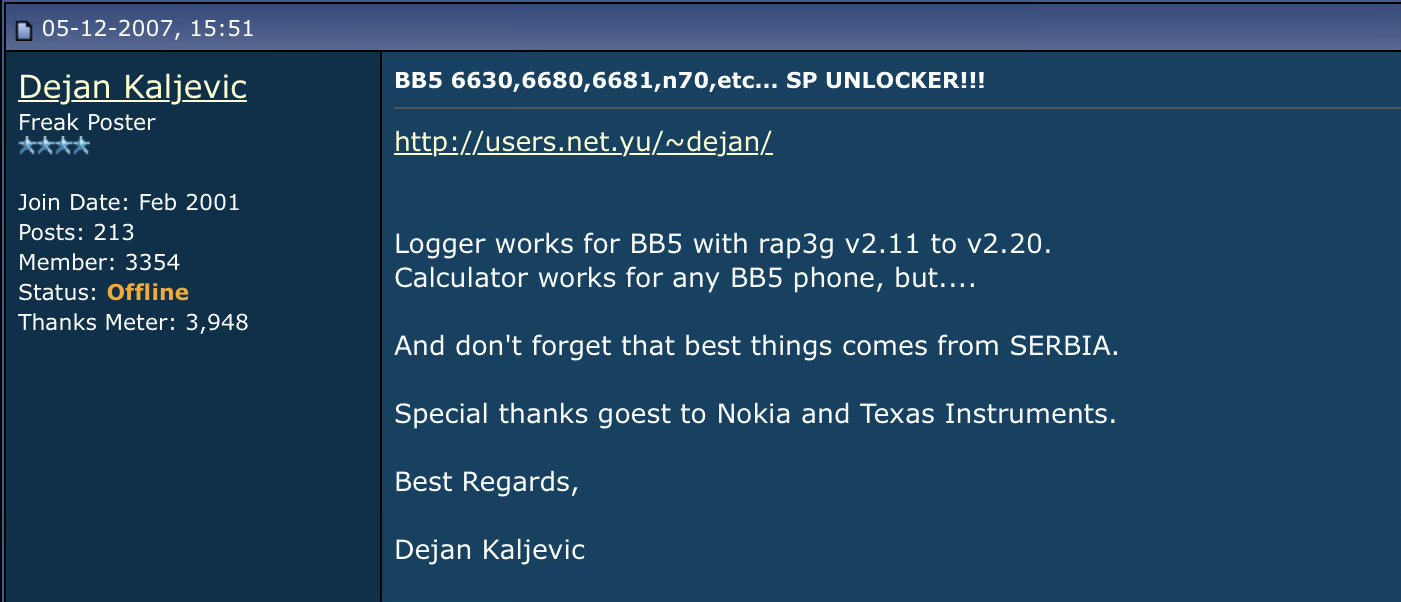
The logger’s limits mattered: this was not a universal IMEI-only unlocker. Tap the screenshot to view it at full size.
Why BB5 never became one simple free calculator
BB5 continued to evolve. Later security levels, commonly discussed as SL1, SL2 and SL3, meant that a solution for one group of phones didn’t automatically solve the next.
By 2011, commercial tool announcements were advertising SL3 brute-force workflows, including graphics-card computing and jobs split between computers. Some functions required paid activation or credits.[8]
Here the approach could involve taking data read from a supported phone and searching a huge number of possibilities to find a matching code. That was very different from the quick, fixed calculation people associated with older Nokia calculators.
So the journey didn’t end with every Nokia becoming free and easy to unlock. It became a mixture of free releases, specialist equipment, paid services and methods with very specific limits.
My small part in the story
UnlockMe’s job was to help people make sense of all this. Find the useful software, explain what it did and turn a complicated forum discussion into instructions someone could follow at home.
My old dluik forum posts are still there in the July 2003 calculator discussion, sharing a download mirror and suggesting ways to make the software easier to use. Later, I built an automated telephone service which collected a caller’s phone details and read an unlock code back to them.[5][9]
On 22 March 2009, I announced that my free online calculator was finished. It brought the older Nokia calculations into the browser, building on the wider community’s work rather than inventing the underlying algorithms.[4]
That was always the attraction for me: helping someone discover that a job they expected to pay for was something they could do themselves.
A few digits, and a lot of work behind them
From the outside, Nokia unlocking could look like typing a few numbers into a phone. Behind those numbers were developers studying handsets, people writing tools, forum members testing releases and site owners explaining the results.
Dejan was an important part of that history. So were Jozso, Azywerks, MONO, indear and the many others whose work made the tools available and usable.
The old tutorials capture what it felt like when the pieces came together. Connect the phone. Run the tool. Or, later, calculate a code and type it in.
That’s it. Your phone is unlocked.
Making it that simple took a remarkable amount of work.
Sources and a few historical notes
This story draws on the original UnlockMe files and contemporary forum posts. Dates below document announcements and availability, rather than proving who made every discovery first. Some forum links restrict access or rely on indexed archive copies.
- The cable era: preserved UnlockMe DCT3 unlocking tutorial, recommending Rollis 1.8, and free DCT3 tutorial. The original archive supplied by the author was checked directly. These are historical descriptions, not newly tested instructions.
- Dejan’s early work: GSM-Forum, “New nokia 5510 DCT3 phone??”, November 2001, refers to his flasher. Flashing tools, security-code calculators and network unlocking are distinct contributions; this article does not attribute the original discovery of both DCT3/DCT4 code algorithms to Dejan.
- DCT4 dongles and dct4nck: Dan Luik, “Nokia Unlock Codes & Box Serials Explained”, dated 8 February 2004, checked in the preserved archive. It identifies Jozso’s program and describes interfaces built around it. Its further theories about Nokia issuing 2,000 dongles, stolen hardware and Nokia’s intentions are not independently established and have not been adopted here as fact. Its broad compatibility claims belong to their original period.
- Prices and release milestones: preserved UnlockMe news archive: 19 February, 25 March and 9 July 2003; 29 January and 11 February 2004; 22 March 2009. These record the £90/£60 offers, free DCT4 availability, MONO/Trycktill, Unique’s software and the later UnlockMe web calculator. A preserved bulletin is evidence of what the site reported, not a worldwide first.
- DCT4 credits and UnlockMe participation: d_bug’s “Windows based DCT4 calc *Almost*”, 10 July 2003, credits Azywerks and Jozso. The thread includes dluik’s download mirror; later replies include usability suggestions. Release credits do not establish sole authorship of every underlying discovery.
- Public implementations: indear, “C source – DCT3 and DCT4 algorithm!”, 14 April 2004. The replies document testing, Crux’s calculator, skynet’s Java versions and discussion of free distribution. The simple recipe explanation draws on the previously examined preserved UnlockMe PHP implementation and these public implementation records.
- Dejan’s BB5 release: “BB5 6630,6680,6681,n70,etc… SP UNLOCKER!!!”, 12 May 2007. The indexed page 42 reproduces the announcement and its RAP3G v2.11–v2.20 logger limit; page 159 includes early success reports. A supported model name alone does not guarantee every hardware or firmware variant works.
- Later BB5 developments: ATF product announcements, 7 March 2011 update and v7.49 update, document SL1/SL2 functions, SL3 brute force, activation/credit terms and distributed Hashcat jobs. These establish advertised workflows, not independent confirmation of every vendor compatibility or speed claim.
- Telephone service: the surviving UnlockMe bulletin announces a live code-calculating hotline on 25 March 2004. The author’s recollection of earlier development and a different tariff is not used to establish an earlier launch date here.
Image credits
Nokia 3310: AI-created studio illustration, using the original handset photograph by Michael Brandtner (Discostu) as a design reference. Reference photograph: public domain.

Nokia 6310i: AI-created studio illustration adapted from Heikoriffeler’s reference photograph. Background, lighting, surfaces and screen were changed. This illustration is offered under CC BY-SA 3.0.

Nokia N70: AI-created studio illustration using the reference photograph credited to Jericomobile / Anttihav (Antti Havukainen). Reference: CC BY 2.5. Lighting, background and presentation were recreated.

Software and equipment: original images preserved in the UnlockMe website archive. Low-resolution screenshots are retained as period material; software credits and original watermarks remain visible. Dejan’s original GSM-Forum post is reproduced in a screenshot supplied by Dan Luik; the post and forum design belong to their respective rights holders.