The short answer: it’s generally legal
Yes — unlocking your own phone so you can use another mobile network is generally legal. Across the countries covered in this guide, ordinary network unlocking is a recognised part of switching providers. The idea that it is automatically illegal or somehow “dodgy” is an old myth.
The details still matter: you should own the phone or have permission, and use a lawful method. What usually varies between countries is when the network must help, whether it can charge, and which conditions apply. Legal to unlock does not always mean entitled to an immediate, free unlock.
We answered this question in the original UnlockMe FAQ, back when locked Nokias and unlock codes were everyday topics. A lot has changed since then, so here is the modern version — including independent shops, paid software and online IMEI services.
Updated: 7 November 2026. General information about consumer network unlocking; rules and provider policies can change.
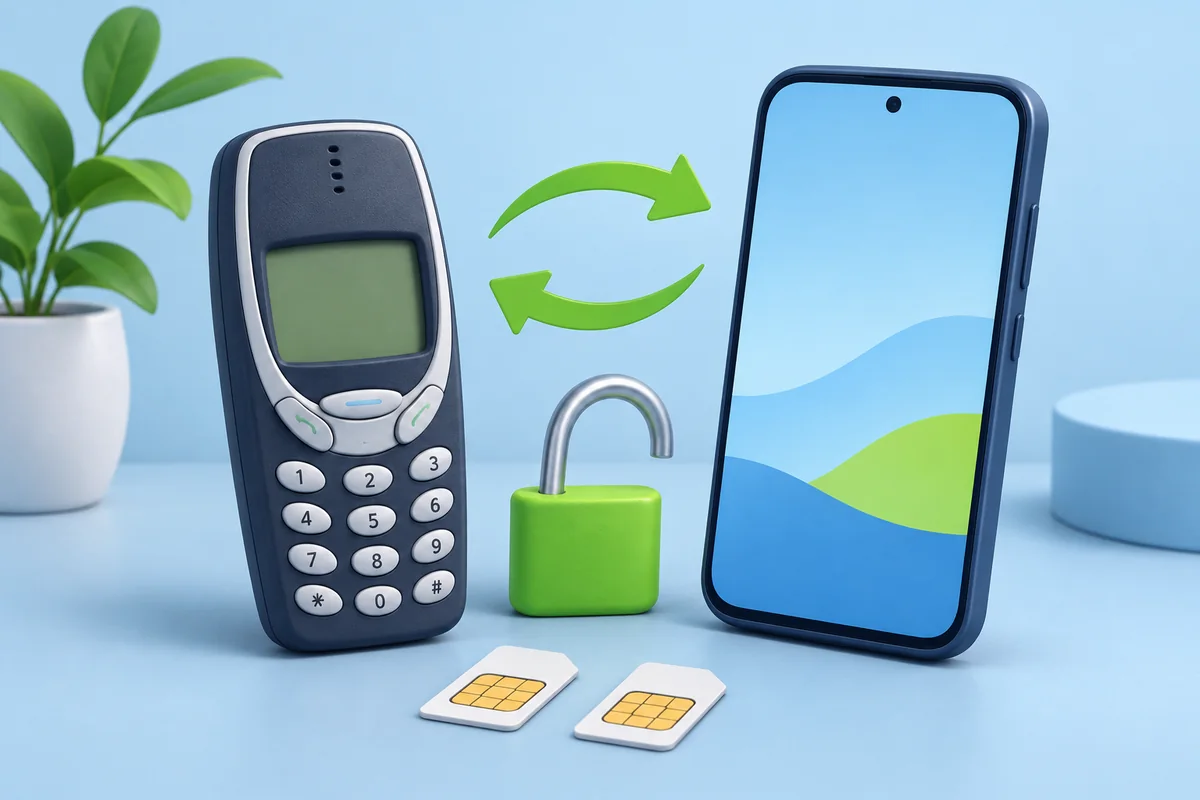
First, which kind of “unlock” do you mean?
A network lock — also called a SIM lock or carrier lock — restricts which mobile provider your phone can use. Removing it lets you use another provider, as long as the handset is compatible. This can affect both physical SIMs and eSIMs.
It is a different job from resetting a forgotten screen passcode, removing Apple Activation Lock, clearing a stolen-phone blacklist or changing an IMEI. Unfortunately, adverts sometimes use “unlock” for several of these, so it pays to check what is actually being offered. [13] [14]
How the rules differ around the world
These examples show the broad picture. They are not a complete list of every country, and one network’s policy should not be mistaken for a nationwide rule.
| Country | What it means in practice |
|---|---|
| United Kingdom | Mobile companies have been banned from selling locked handsets since 17 December 2021. Older or imported phones may still need unlocking. [1] |
| United States | Qualifying, owner-authorised unlocking is covered by a copyright exemption. Carrier eligibility, payment and waiting-period rules can still apply. [2] [4] |
| Canada | Providers must supply unlocked devices. Qualifying current customers can request a free unlock for a locked device. [5] [6] |
| France | No-commitment offers should come with unlocked phones. For commitment contracts, the general free-unlocking deadline is six months; participating federation members commit to three. [7] |
| Finland | A phone supplied with a tied subscription may remain SIM-locked until the agreement ends, including where it is ended early. [8] |
| Australia | Providers offer unlocking, although some prepaid phones have an unlocking fee. Check the original provider’s terms. [9] |
A few details worth knowing
In the UK, the big change was about new sales. Ofcom’s December 2021 ban did not remotely unlock every handset already in a drawer. Your old Nokia or a second-hand phone from overseas might still be locked. Ask the original network before paying someone else; the £35 charge mentioned in our archive FAQ is a piece of history, not a current standard price. [1]
Why did people think unlocking was illegal in America?
There was a real legal wobble behind those headlines. US copyright law restricts bypassing certain software protections, with exemptions reviewed every three years. A phone-unlocking exemption was introduced in 2006. In 2012, it was narrowed: older phones remained covered, but the exemption no longer covered new phones acquired after 26 January 2013. That was more specific than “all unlocking became illegal”, although it understandably caused confusion. [22]
Phone owners pushed back. A White House petition launched in January 2013 attracted more than 114,000 signatures. On 1 August 2014, President Barack Obama signed the Unlocking Consumer Choice and Wireless Competition Act, restoring the earlier exemption and expressly allowing qualifying unlocking by someone acting at the owner’s direction. The White House described it as the first time a We the People petition led to a legislative fix. [3] [23]
For readers today, the useful takeaway is that ordinary, qualifying network unlocking is legal in the US. The current exemption covers unlocking solely to connect to a wireless network that authorises the connection. It does not cancel handset finance, guarantee an immediate carrier unlock or give every third-party method a free pass. [2] [3]
Carrier policies also move on. Verizon changed its policy from 27 January 2026: standard monthly-plan devices generally unlock after full payment, while eligible prepaid devices require 365 days of paid active service and an unlock request. Additional checks or delays can apply, and older devices may fall under its previous 60-day policy. That is a Verizon example, not a universal US deadline. [4]
Canada, France, Australia and the EU
In Canada, customer status matters. Unlocked devices became the rule on 1 December 2017. The CRTC later clarified that the mandatory free-unlocking obligation covers devices tied to an ongoing contract, including prepaid service. It does not automatically give every second-hand buyer or former customer the same entitlement, although a provider may choose to help. [5] [6] [15]
In France, three months and six months describe different commitments. Arcep gives a general six-month free-unlocking deadline for commitment contracts, with a three-month commitment from members of the French telecoms federation. Earlier unlocking may cost money. For an offer without a minimum commitment, a phone that is locked must be unlocked promptly. [7]
In Australia, fees can depend on how long you have had the service. Telstra’s published prepaid fees are A$80 for an unactivated phone or service active for six months or less, A$25 after six months and up to two years, then free after more than two years. Those are Telstra’s terms, not an Australian legal tariff. [9]
EU rules also address removing network restrictions when a customer lawfully ends certain contracts early and keeps subsidised equipment. National implementation and the circumstances matter; this is not a promise that every phone everywhere in the EU must be unlocked immediately on request. [10]
Can you use an independent unlocking service?
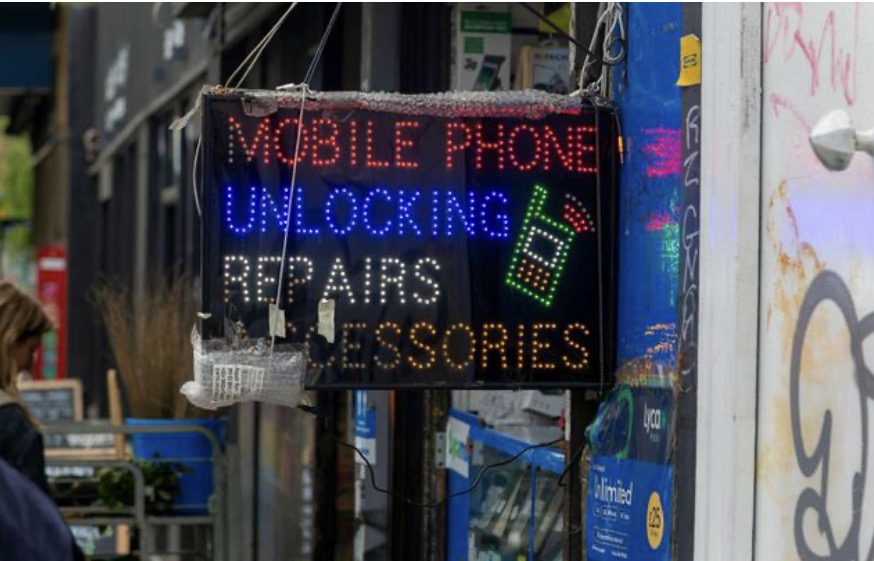
Yes, a third-party unlock can be a legitimate option. Paying an independent shop, buying software or using an online service does not, by itself, make the unlock illegal. You still need ownership or permission and a lawful method. Ofcom has discussed independent unlocking shops as a route customers use, without endorsing individual businesses. [21]
It is sensible to try the original network first, because its route may already be free. But an independent specialist can still be useful, particularly for an older handset.
Buying unlocking software or a cable
Some tools calculate an unlock code; others work through a cable or specialist hardware. Our classic Nokia calculators are an example of generating a code without asking the network to issue one each time.
Before paying, check the exact model and software version, whether extra credits or hardware are needed, and whether the procedure could erase data or affect updates. A tool advertised for “unlocking” might only reset a screen password. Buying a software licence is not proof that every advertised use is lawful.
Using an online IMEI service
An IMEI is the phone’s identifier. An online service may use it to supply a code or arrange an unlock through a provider’s process. Giving a service your IMEI is different from changing the IMEI.
The words “IMEI unlock”, “official unlock” or “factory unlock” do not tell you how the seller obtains the result. Check the business, the supported network and the refund terms. For an iPhone, Apple says the carrier must perform the network unlock; Apple cannot do it itself. An intermediary still needs a valid route to that result. [13]
Can a third party unlock it before the network will?
Sometimes an alternative technical route exists, but the legal answer depends on the method and country. A network’s waiting period tells you when it will help; it does not settle every question about an independent tool. If the seller uses the network’s own process, its payment and eligibility checks can still apply.
The US has an extra wrinkle: its exemption can cover someone acting at the owner’s direction, but that does not automatically make every unlocking tool or service lawful to sell. Separate rules govern supplying circumvention tools and services. [2] [19]
The method really does matter. A 2021 US case involving an AT&T unlocking scheme led to a 12-year sentence after a guilty plea to conspiracy to commit wire fraud. It involved bribed employees and malware on the carrier’s systems — quite a different situation from an ordinary customer legitimately unlocking their phone. [20]
Four checks before paying anyone
- Check the seller. Look for a real business, clear contact details and an independent track record.
- Check the job. Are you buying a full network unlock, an eligibility check, a code lookup or a temporary workaround?
- Check the total price. Include software credits, cables or subscriptions, and read the timescale and refund conditions.
- Check the access requested. Verify your account directly with the network where possible. Do not give a seller your Apple, Google or email password or authentication codes.
Avoid offers based on stolen credentials, bribed staff, IMEI alteration or guaranteed removal of theft-related blocks. A service working once is not proof that its method is lawful.
Where can it cross the line?
This is where the word “unlocking” can get misleading. These are separate issues from removing a normal network lock:
- Changing the IMEI. In the UK, changing or interfering with a phone’s unique device identifier is an offence, subject to the manufacturer/written-consent exception in the legislation. Simply owning the phone does not create that exception. A normal network unlock leaves the IMEI alone. [11] [16]
- Accessing someone else’s device or account without permission. Permission to change networks is not permission to read another person’s messages. Unauthorised access can raise separate criminal-law issues, including under the UK Computer Misuse Act. [12]
- Fraud or stolen credentials. Wanting an unlocked phone does not authorise false ownership claims or unlawful access to a network’s systems.
A network unlock also does not remove a blacklist or Apple Activation Lock. If a block is mistaken or a stolen phone has been recovered, use the responsible provider’s or manufacturer’s official process. Our mobile phone blacklisting guide explains the different restrictions. [14]
And yes, you still owe any remaining payments
Unlocking changes what networks the phone can use. It does not cancel your airtime agreement, settle handset finance or wipe out an unpaid balance. Check those obligations separately, even if another SIM now works perfectly. [8] [18]
What about the Nokia in your drawer?
Entering a valid network unlock code into a classic Nokia is still network unlocking. Our Nokia unlock calculator and security code calculator do different jobs; our guide to how the calculators work explains both.
There is one practical catch: an unlocked phone still needs compatible radio bands, a supported network technology and acceptance by the new provider. Unlocking cannot bring back a retired 2G or 3G network. Imported phones also need checking against the original carrier’s terms and the rules where the work is done. [17]
So, if you own the handset and simply want the freedom to choose another provider, there is usually nothing mysterious about it. Start with the original network, identify the actual lock, and choose a reputable route. For a country outside this guide, check its telecoms regulator rather than assuming another country’s rules apply.
Sources and further reading
Official regulator, legislation, government and provider sources checked on 7 November 2026. This guide is general information, not advice on an individual legal dispute. Opening illustration created for UnlockMe.
- Ofcom — ban on mobile companies selling locked handsets (17 December 2021)
- U.S. Copyright Office — current unlocking exemption, 37 CFR §201.40(b)(8) and (c)
- U.S. Copyright Office — Unlocking Consumer Choice and Wireless Competition Act (2014)
- Verizon — current device unlocking policies and purchase-date distinctions
- CRTC — Wireless Code, section F.1
- CRTC — clarification of who is entitled to free unlocking, Decision 2019-169
- Arcep — SIM locking, unlocking deadlines and charges
- Traficom — porting instructions, including tied handset contracts
- Telstra — unlocking prepaid phones and applicable fees
- European Electronic Communications Code — Directive (EU) 2018/1972, Article 105(6)
- UK — Mobile Telephones (Re-programming) Act 2002, section 1
- UK — Computer Misuse Act 1990, section 1
- Apple — unlocking an iPhone for another network provider
- Apple — Activation Lock for iPhone and iPad
- CRTC — 2017 Wireless Code changes and commencement date
- UK Government — explanation of IMEI reprogramming offences (section 62)
- Verizon — unlocking and compatibility with other networks
- ACCC — switching mobile services and checking termination charges
- U.S. Copyright Office — 17 USC §1201, including separate rules on circumvention tools and services
- U.S. Department of Justice — 2021 sentencing in the AT&T unlocking fraud case
- Ofcom — consultation discussing customers using third-party unlocking shops, paragraph 8.37 (historical context)
- U.S. Copyright Office — 2014 rule explaining the 2006 exemption and the 2012–2013 restriction
- Obama White House archive — the unlocking petition and 1 August 2014 signing